
It’s late spring semester at Howard College, and inside a rented Airbnb, a bunch of younger Black creatives are locked in. Their cameras are up and the lights are sizzling. Somebody is adjusting a plate of meals for the fifth time. On the middle of all of it is 21-year-old Na’vaeh Dudley, directing a narrative that didn’t come from principle or creativeness, however from one thing way more intimate.
Her personal life.
Her brief movie, Consumption, is about isolation and the difficult, usually invisible relationship between meals and feelings. However what makes the mission hit in another way is that it facilities an expertise that’s not often talked about in Black communities—consuming problems.
Na’vaeh is aware of precisely how that silence works.
“Consumption actually explores how isolation can devour us,” she says. “And the way connection can generally interrupt that cycle.”
RELATED CONTENT: Kerry Washington Opens Up About Being Suicidal Whereas Battling Consuming Dysfunction
For many years, consuming problems have been framed as a difficulty affecting white women and girls. The picture is acquainted: skinny, prosperous, and suburban. However that framing has all the time been incomplete and dangerous as a result of Black ladies and younger ladies have been coping with disordered consuming, too. They’ve simply been missed.
Analysis exhibits that Black adolescents and teenage ladies are 50% extra possible to have interaction in bulimic behaviors than their white friends. On the identical time, they’re far much less possible to be identified or obtain remedy. That disconnect between who’s struggling and who will get acknowledged has created a quiet disaster, and that’s the hole Na’vaeh is moving into.
In Consumption, the principle character Nori lives inside a fastidiously managed world. Each second is scheduled, all her habits are intentional, and each chew is measured. However when her surroundings begins to shift by means of the presence of her roommate, disrupted routines, and human connection, these patterns begin to break.
Lead actress Shierra King carries that weight with virtually no dialogue. In a single scene, she picks at a plate of lasagna. Her actions are small however loaded with stress. It took almost 5 hours of taking pictures take after take to get that second proper. As a result of for Na’vaeh, the aim wasn’t simply to inform a narrative. It was to make folks really feel one thing they won’t have language for.
And that issues, particularly if you take a look at how consuming problems present up in Black communities. Cultural norms round meals, physique picture, and neighborhood can masks dangerous patterns, making it tougher for folks to even acknowledge what they’re experiencing. In some areas, consuming extra is normalized. In others, management is praised. In lots of instances, the road between coping and hurt will get blurred. That’s the fact Consumption is attempting to seize.
Na’vaeh’s connection to the story deepened throughout the COVID-19 pandemic, when isolation grew to become a world expertise however hit in another way relying on who you have been and what you have been carrying.
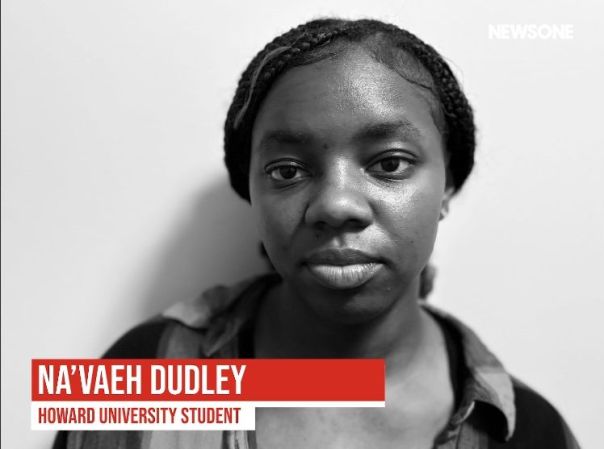
“Throughout COVID, folks couldn’t even go inside six ft of one another,” she says. “Connection, friendship, empathy, that’s what folks wanted.”
For her, the absence of that connection made every thing extra intense and quieter. Filmmaking grew to become a technique to course of that. However even bringing the mission to life got here with its personal challenges.
It’s a heavy movie season at Howard, with MFA college students taking pictures thesis initiatives and crews unfold skinny. So Na’vaeh needed to construct her group from the bottom up by posting casting calls, reaching out in DMV movie group chats, and pulling in associates and collaborators wherever she may discover them.
This isn’t nearly one movie. It’s about what occurs when Black ladies begin telling tales which have traditionally been erased, dismissed, or misunderstood.
Practically 30 million folks in america will expertise an consuming dysfunction of their lifetime. Charges have greater than doubled globally in current many years. However the face of that information remains to be overwhelmingly portrayed as white, which leaves Black women and girls navigating these experiences with out visibility, sources, or recognition.
Na’vaeh is pushing in opposition to that. Not with statistics, however with story. Her movie doesn’t supply a clear decision. There’s no dramatic breakthrough second, or prompt therapeutic as a result of that’s not the way it works.
“Cures aren’t instantaneous,” she says. “Typically one of the best factor you are able to do is take a step towards therapeutic.”
That honesty is what makes the mission land. It doesn’t attempt to repair the issue. It names it. For many individuals watching, particularly those that have by no means seen themselves mirrored in conversations about consuming problems, that alone is highly effective.
Na’vaeh Dudley is a part of a era of younger Black ladies who’re performed ready for his or her experiences to be validated by mainstream narratives, and so they’re documenting them and turning them into one thing that may be seen, heard, and felt.
Typically step one towards therapeutic isn’t fixing something. It’s lastly having the ability to say, “That is occurring” and realizing you’re not the one one.
Kannon Trowell is a journalism main at Howard College. She is fascinated about leisure reporting. You’ll be able to comply with her on LinkedIn.
RELATED CONTENT: ‘Love Your Thighs Day’: 7 Well-known Black Girls Who’ve Shared Their Struggles With Physique Picture