
Within the late Nineties, 98 Levels weren’t some label-manufactured in a single day sensation. They grinded for his or her second and earned the eye of Motown Information on the power of their expertise.
However incomes a seat on the desk got here with situations — a really particular blueprint that demanded they turn out to be one thing they had been by no means constructed to be.
The music trade has all the time had a distinct agenda, packaging artists in sounds and aesthetics that look worthwhile on paper however ring hole in actual life. That rigidity between authenticity and expectation has haunted performers for many years, significantly these strolling the tightrope between pop polish and what followers name blue-eyed soul.
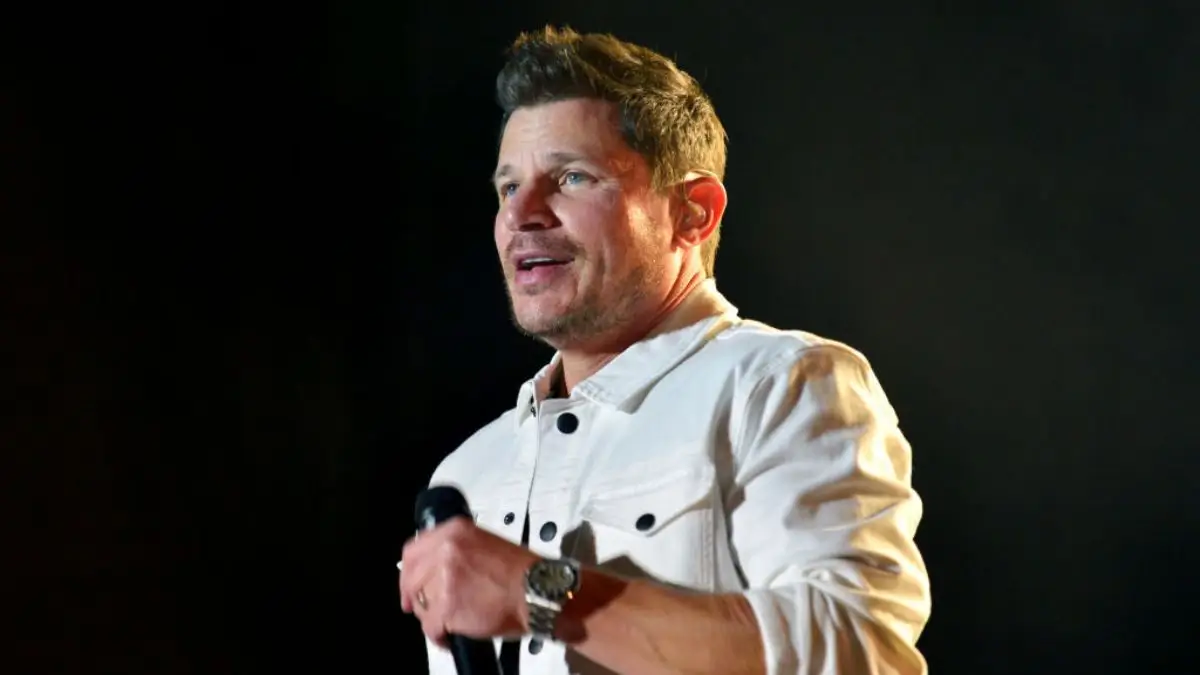
Now the group’s lead singer, Nick Lachey, is claiming the label needed them to repeat one other chart-topping music group that was climbing the charts sooner than they had been.
‘JoJo Needed Dalvin, DeVanté Needed Me’: Okay-Ci Hailey Claims His Brother JoJo Initially Needed Jodeci to Be a Duo As an alternative of a Quartet
In an interview with Folks, Lachey recalled simply how direct that steerage was.
“The president of Motown, he needed us to be the white Jodeci. So he was attempting to offer us that in a crash course,” he mentioned in a documentary, reflecting on the early days of the group’s improvement.
He described being despatched to carry out in Black church buildings in Harlem and touring to work with members of Jodeci, moments that felt much less like artistic exploration and extra like cultural immersion on fast-forward.
“Do we want a bulletproof vest? What did we simply stroll into?” he remembered pondering as he tried to course of the unfamiliar atmosphere.

For Lachey, the expertise sparked deeper questions on id and belonging.
“It does make you query, ‘Nicely, why did you signal us in case you didn’t need us to be who we’re?’ You’re attempting to make us into one thing else,” he defined. Over time, the stress to suit a mildew started to weigh closely.
Lachey admitted that the expectations “actually begin to mess with you mentally,” leaving him alone at house questioning, “What am I? Who am I?”
On Lipstick Alley, many reacted with a mixture of disbelief and humor as soon as the story resurfaced.
One commenter merely wrote, “Sit down!” whereas one other mentioned, ” A white Jodeci. They will go to hell with that one. Black teams can’t recreate Jodeci. Hell, Okay-Ci and Jojo couldn’t recreate Jodeci.
‘Keep’ – Jodeci. pic.twitter.com/cVCrWZZ0Cq
— RNB RADAR (@rnbradar) March 1, 2026
Another person mentioned, “It seems like even he thought it was loopy. And he’d be proper.”
Critics targeted on his specific selection of phrases, as one famous, “That’s effective. However Nick offered none of that context, simply “Devante wanted a bulletproof vest to go to a black church in Harlem.” That’s the racist framing I’m speaking about.”
One other particular person agreed, “That bulletproof vest half was cap. They by no means miss a possibility to stereotype even when stealing from us. f–ok you too, Nick. Ya flop.”
I get that that is extra on Motown than Nick/the group, however let me remind people of their debut single. Jodeci the place?
(Additionally not hating on the track — it is a good one, but it surely completely provides “90s pop.”) pic.twitter.com/ftSm43lpzA
— ⭐ Jonathan Apollo ⭐ (@IAmJonnyApollo) April 9, 2026
Some commenters mentioned they weren’t shocked, pointing to what they imagine was a sample within the late ’90s and early 2000s the place white artists had been pushed to undertake a extra “Black” picture—referencing L.A. Reid and Pink—whereas arguing that Black executives performed a job, including that it’s refreshing to now hear a white artist overtly admit discomfort with that method and acknowledge it felt flawed.
Two observers mentioned, “He’s telling the reality. There’s so many examples like Coloration Me Dangerous and the way they marketed N Sync,” and “N’sync undoubtedly went by their ‘attempting to be black’ section.”
However nonetheless others weren’t shopping for Lachey’s comparability as one mentioned, “I can’t look ahead to Okay-Ci and JoJo to listen to this s—t,” whereas one other joked, “Not with the stiff a– dance strikes that they had.”
This dialog about white artists emulating Black artists will not be new.
Artists like Teena Marie, Darryl Corridor & John Oates, Phoebe Snow, Michael McDonald, or Amy Winehouse weren’t labeled “blue-eyed soul” with out motive. Their credibility got here from sincerity, not technique, and audiences acknowledged that their sound wasn’t manufactured.
As we speak, discourse about authenticity continues, particularly after rapper Jack Harlow confronted backlash for saying he “obtained Blacker” whereas shaping the sound of his 2026 challenge, “Monica.”
“I obtained Blacker,” he mentioned. “I really like Black music. I really like the sound of Black music. And, after all, I’m hyper-aware of the politics of as we speak—the safer touchdown spot that a variety of my white contemporaries have discovered. It appealed to me…”
Jack Harlow speaks on leaning additional into Black music on his new album Monica relatively than taking the “safer route” by retreating into historically white sounds.
“I obtained Blacker… I really like Black music. I really like the sound of Black music. And, after all, I’m hyper-aware of the… pic.twitter.com/xZjWVKe34J
— XXL Journal (@XXL) March 13, 2026
His remark reignited debate about how artists body their influences and the way language can reinforce stereotypes. For a lot of listeners, the backlash went past one phrase, reflecting an extended historical past of artists borrowing from Black music with out understanding the tradition behind it.
That popular culture rhetoric additionally shapes how individuals speak about teams like Jodeci, Boyz II Males, and New Version vs. New Children on the Block or The Backstreet Boys.
The Black acts by no means thought-about themselves “boy bands” within the conventional sense; regardless of being younger males.
Labeling them alongside pop acts that adopted can generally flatten the legacy they constructed, in response to MIC.com, as a result of it overlooks the originality and cultural basis that outlined their sound.
The excellence issues as a result of it reminds audiences that Black vocal teams didn’t simply affect the style — they created it, shaping the blueprint others would later comply with. In the event that they mimicked anybody, it was the deep cultural traditions and musical roots they had been raised on.
Wanting again, Lachey’s reflection reads much less like a grievance and extra like a cautionary story about id in an trade pushed by developments and expectations. Success could include brilliant lights and platinum data, however the seek for authenticity usually turns into the actual headline behind the music.